
Quick verdicts
| # | The claim | Verdict |
|---|---|---|
| 1 | Hair loss only comes from your mother’s side | MYTH |
| 2 | Wearing hats makes you go bald | MYTH |
| 3 | Washing your hair every day makes it fall out | MYTH |
| 4 | Biotin supplements will regrow your hair | MYTH |
| 5 | Rosemary oil works just as well as minoxidil | PARTLY TRUE |
| 6 | Minoxidil makes your hair fall out | PARTLY TRUE |
| 7 | Stress can make your hair fall out | TRUE |
| 8 | Scalp massage is just a feel-good gimmick | PARTLY TRUE |
| 9 | Caffeine shampoo is as good as minoxidil | PARTLY TRUE |
| 10 | Laser caps and combs are a scam | MYTH |
| 11 | Hair loss is only a men’s problem | MYTH |
| 12 | Nothing really stops pattern hair loss, so why bother? | MYTH |
12 hair regrowth myths, fact-checked
1. “Hair loss only comes from your mother’s side”
MYTH This one is everywhere, and it’s only a small piece of the story. One gene linked to pattern hair loss (the androgen receptor gene) sits on the X chromosome, which men inherit from their mother. But researchers have since found many other genes involved, spread across chromosomes you get from both parents.The truth: Look at both sides of the family. Your dad’s hairline matters too, and plenty of people with a full-haired grandfather still thin early.
2. “Wearing hats makes you go bald”
MYTH A normal cap or beanie doesn’t starve follicles of air or cause pattern hair loss. Follicles get oxygen and nutrients from your blood, not from the air above your scalp.The truth: The exception is constant pulling. Very tight hats, helmets, ponytails, braids or extensions worn for years can cause traction alopecia, which can become permanent. Loosen up and switch styles.
3. “Washing your hair every day makes it fall out”
MYTH Seeing hair in the drain feels alarming, but the American Academy of Dermatology says shedding around 50 to 100 hairs a day is normal. Shampooing just loosens hairs that had already finished their growth cycle and were going to fall anyway.The truth: Skipping washes doesn’t save hair, it just saves it up for the next shower. If you have dandruff or an oily, itchy scalp, regular washing (with a medicated shampoo like ketoconazole if needed) is the better move.
4. “Biotin supplements will regrow your hair”
MYTH Biotin is the most marketed “hair vitamin” there is, but true biotin deficiency is rare, and there’s little good evidence that extra biotin grows hair in people who already have normal levels. It does nothing for pattern hair loss. There’s also a real downside: the FDA has warned that high-dose biotin can interfere with some lab tests, including a heart attack test (troponin), giving falsely high or low results.The truth: Save your money unless a doctor finds a deficiency. If you take biotin anyway, tell your doctor before any blood test. Low iron, vitamin D or thyroid problems are more common culprits worth checking.
5. “Rosemary oil works just as well as minoxidil”
PARTLY TRUE This claim comes from one real study: a 2015 trial of about 100 men with pattern hair loss that compared rosemary oil with 2% minoxidil for six months. Both groups saw similar increases in hair count, and the rosemary group had less scalp itching. That’s encouraging, but it was a single, small study against the weaker 2% strength, not the 5% most people use today, and it hasn’t been widely repeated.The truth: Rosemary oil is a reasonable, low-risk thing to try, especially if you’re nervous about minoxidil. Just don’t expect it to beat 5% minoxidil, and dilute pure essential oil in a carrier oil to avoid irritation.
6. “Minoxidil makes your hair fall out”
PARTLY TRUE Many people do notice more shedding in the first two to eight weeks of minoxidil. That’s actually a sign it’s working: resting hairs are pushed out so new growing hairs can take their place. The part that’s true: minoxidil only works while you use it. If you stop, the extra hair you gained typically sheds over the next few months and you return to where you would have been.The truth: Push through the early shed, take a photo every month in the same light, and judge results at four to six months. Treat it as a long-term habit, not a short course.
7. “Stress can make your hair fall out”
TRUE Yes. A major shock to the body, like a high fever, surgery, childbirth, a crash diet or intense emotional stress, can push lots of hairs into the resting phase at once. This is called telogen effluvium, and the shedding usually shows up two to three months after the event, which is why people rarely connect the two.The truth: The good news is that it usually grows back on its own within several months once the trigger is gone. If the shedding lasts longer than six months, see a doctor to check iron, thyroid and other causes.
8. “Scalp massage is just a feel-good gimmick”
PARTLY TRUE The evidence is small but real. A 2016 study of 9 men who did a 4-minute scalp massage every day for 24 weeks found their hairs got thicker, although hair counts didn’t change. A larger 2019 survey of people with hair loss found many reported their loss stabilized or improved with daily massage.The truth: It won’t regrow a bald spot, but it costs almost nothing, feels nice, and can be a good habit to pair with minoxidil or rosemary oil. A cheap silicone massager makes it easier to stick with.
9. “Caffeine shampoo is as good as minoxidil”
PARTLY TRUE A 2017 trial of 210 men found a 0.2% caffeine leave-on liquid performed about as well as 5% minoxidil over six months. That’s a promising result, but it was a leave-on product. Shampoo is rinsed off after a couple of minutes, and there’s far less evidence that caffeine shampoo alone regrows hair.The truth: Caffeine shampoo is a nice add-on and won’t hurt, but don’t swap it in for minoxidil. If you use one, leave the lather on for the full two minutes.
10. “Laser caps and combs are a scam”
MYTH Some are, but the better FDA-cleared low-level laser devices have been tested in randomized trials against fake (sham) devices and showed modest increases in hair counts. They seem to work best for early to moderate thinning.The truth: “Modest” is the key word. Lasers are expensive, need regular sessions for months, and work best alongside minoxidil, not instead of it. Buy an FDA-cleared device, not a cheap no-name gadget.
11. “Hair loss is only a men’s problem”
MYTH Female pattern hair loss is very common, especially after menopause, but it often looks different from men’s. Instead of a receding hairline, women usually notice a widening part or thinner ponytail.The truth: 5% minoxidil foam used once a day is approved for women and is the most proven over-the-counter option. Women with sudden shedding, irregular periods, acne or excess facial hair should also see a doctor, since hormones or iron can be involved.
12. “Nothing really stops pattern hair loss, so why bother?”
MYTH Pattern hair loss is progressive, but it is treatable. Treatments are much better at keeping the hair you have than regrowing hair on fully bald areas, which is exactly why starting early matters.The truth: Start with an affordable over-the-counter option now, and talk to a doctor or dermatologist about prescription options like finasteride or low-dose oral minoxidil if you want stronger results.
The budget hair regrowth kit that’s actually backed by research
Once you strip away the myths, the shopping list gets short. Minoxidil is the proven foundation, and the rest are cheap, low-risk add-ons. These are the same products we picked in our hair regrowth treatments guide.| Product | Best for | Price range | |
|---|---|---|---|
| Kirkland Signature Minoxidil 5% Solution (men) | Busting myths 6 and 12 on a budget | Mid-range for a 6-month supply | Buy on Amazon |
| Kirkland Signature Minoxidil 5% Foam (men) | Men who find the liquid greasy or itchy | Mid-range for a 6-month supply | Buy on Amazon |
| Women’s Rogaine 5% Minoxidil Foam | Women with a widening part (myth 11) | Mid-range for a 2-month supply | Buy on Amazon |
| Nizoral Anti-Dandruff Shampoo (1% ketoconazole) | Washing without worry (myth 3) | Budget | Buy on Amazon |
| Mielle Rosemary Mint Scalp & Hair Oil | Trying rosemary oil (myth 5) | Budget | Buy on Amazon |
| Alpecin Caffeine Shampoo C1 | An easy caffeine add-on (myth 9) | Budget | Buy on Amazon |
| HEETA Scalp Massager | The cheapest habit with some data (myth 8) | Budget | Buy on Amazon |
| iRestore Essential Laser Cap | The splurge, FDA-cleared option (myth 10) | Premium | Buy on Amazon |
Kirkland Signature Minoxidil 5% Solution (men)
Best for: Busting myths 6 and 12 on a budget · Price range: Mid-range for a 6-month supply The same active ingredient and strength used in the big minoxidil trials, at a fraction of the brand-name price.Keep in mind: The liquid can be greasy and itchy for some people, and it only works as long as you keep using it.
Check price on AmazonKirkland Signature Minoxidil 5% Foam (men)
Best for: Men who find the liquid greasy or itchy · Price range: Mid-range for a 6-month supply No propylene glycol, so it’s usually gentler on the scalp and dries faster, which makes the twice-a-day habit easier.Keep in mind: Expect some extra shedding in the first few weeks, and the foam can melt quickly in warm hands.
Check price on AmazonWomen’s Rogaine 5% Minoxidil Foam
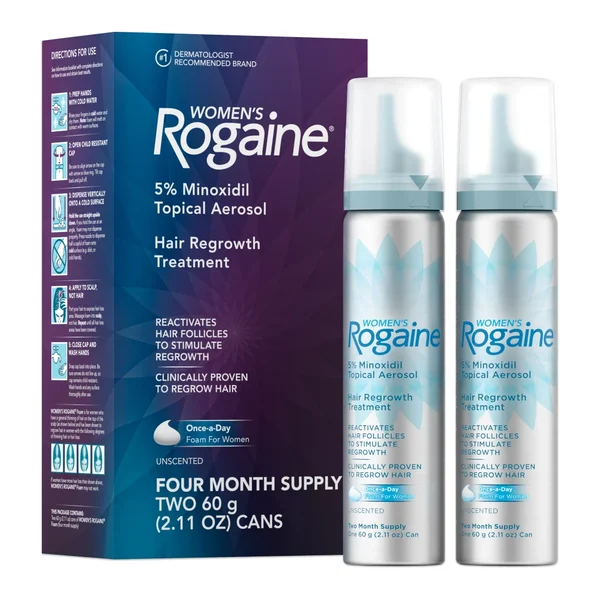
Keep in mind: It costs more per month than the Kirkland foam, and it’s not for use during pregnancy or breastfeeding.
Check price on AmazonNizoral Anti-Dandruff Shampoo (1% ketoconazole)
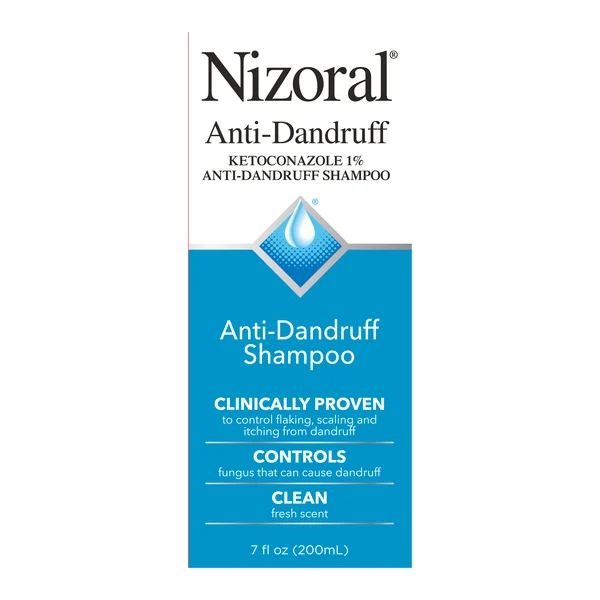
Keep in mind: It can dry out hair if used daily, so 2 to 3 times a week is plenty, and it’s an add-on, not a stand-alone treatment.
Check price on AmazonMielle Rosemary Mint Scalp & Hair Oil
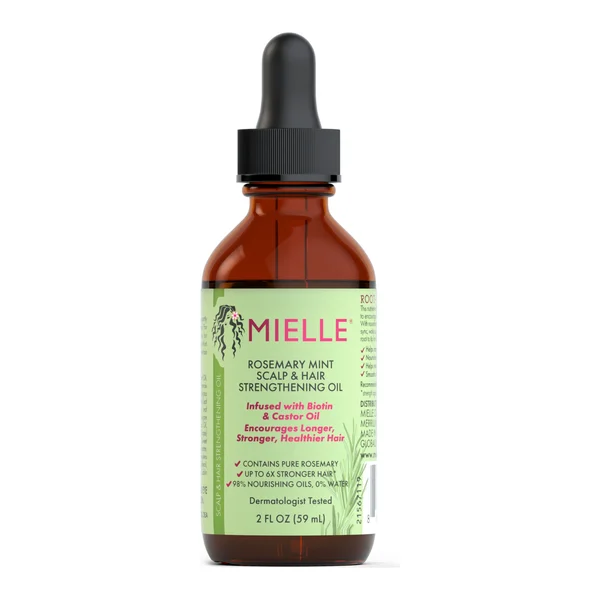
Keep in mind: It’s a blend, not the pure rosemary oil used in the 2015 study, and it can feel heavy on fine or oily hair.
Check price on AmazonAlpecin Caffeine Shampoo C1
Best for: An easy caffeine add-on (myth 9) · Price range: Budget An easy way to add caffeine to your routine without another step. Leave the lather on for two minutes.Keep in mind: Evidence for caffeine shampoo is much weaker than for leave-on caffeine, so think of it as a bonus, not a treatment.
Check price on AmazonHEETA Scalp Massager
Best for: The cheapest habit with some data (myth 8) · Price range: Budget Soft silicone bristles make a daily 4-minute massage easy, in or out of the shower.Keep in mind: Evidence is from small studies, and pressing too hard on an irritated scalp can make it worse.
Check price on AmazoniRestore Essential Laser Cap
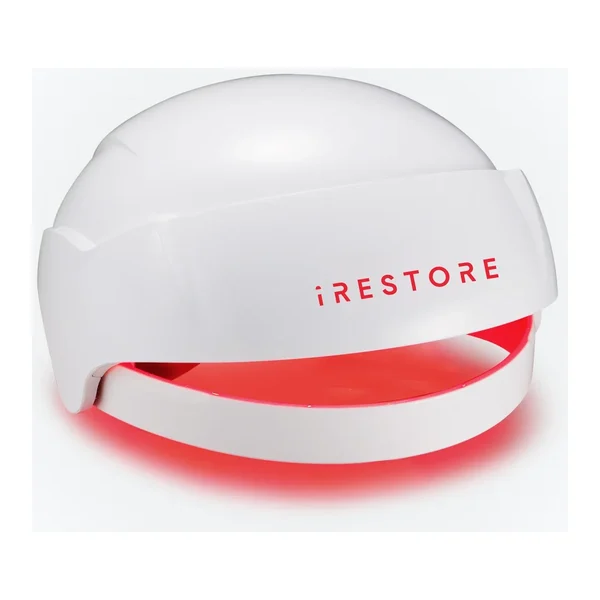
Keep in mind: It’s expensive, results are modest, and you need consistent sessions for several months to see a difference.
Check price on AmazonWhen to see a doctor instead
Over-the-counter products are made for gradual pattern thinning. See a doctor or dermatologist if you notice any of these:- Hair falling out in round patches, clumps or very suddenly
- Redness, scaling, pain or pus on the scalp
- Heavy shedding that lasts longer than six months
- Hair loss along with fatigue, weight change, irregular periods, acne or new facial hair
- Hair loss after starting a new medication